HAVE A CRIMINAL RECORD?

HELP FROM STATE LAWS

WHAT CAN I DO NOW?

FIND AN IMMIGRATION COURT

REVIEW AAO DECISIONS

REVIEW THE BIA MANUAL

REVIEW JUDGE'S BENCHBOOK

GO TO USCIS WEBSITE

GO TO USICE WEBSITE

ALL USCIS FORMS

Special Alert to those noncitizens who applied for SAW or Legalization status under the 1986 IRCA Legislation
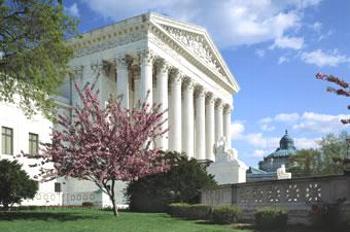
The Supreme Court's front lawn.


Certain noncitizens who once applied for temporary residence benefits under Section 210 of the Immigration and Nationality Act (the "INA"), also commonly referred to as the Special Agricultural Workers Program (the "SAW" Program) or, under Section 245A of the INA, also commonly referred to as the "Amnesty/Legalization" Program, as enacted by the Immigration Reform and Control Act of 1986 ("IRCA"), if these noncitizens are in removal proceedings today before an immigration judge or the BIA, they will have a new opportunity to have their SAW or Legalization applications reviewed by a federal court of appeals.


Which Noncitizens May Be Affected

A great number of noncitizens presently residing in the United States whom are now (or were before) in deportation, exclusion or removal proceedings, may have been applicants for benefits under the Immigration Reform and Control Act of 1986 (IRCA), as applicants for legalization benefits under section 245A of the Immigration and Nationality Act or for benefits under the Special Agricultural Worker (SAW) program under section 210 of the Act.

Congress authorized those applicants to receive judicial review of an administrative denial of their applications for benefits under the IRCA law but it conditioned that opportunity for judicial review of legalization and SAW program administrative denials only when presented to a court of appeals in conjunction with a petition for judicial review of a final order of deportation, exclusion or removal.

And What Does that Mean?

Well, it means that a legalization or SAW applicant whom received an adverse decision from the Administrative Appeals Office (AAO) over his or her appeal from an order of the District Director regarding his or her application for temporary residence (Forms I-687 or I-700), or his or her application for permanent residence (Form I-698 or I-90), will be entitled by law to have a federal court of appeals review the final order of denial of the AAO determining the noncitizen applicant ineligible for either legalization or SAW programs. 

The AAO, originally referred to as the Legalization Appeals Unit or LAU, despite numerous well reasoned published decisions has also been the subject of abundant judicial and scholar criticism for the unfair manner in which those appeals have been administered.   For example, at the beginning of the legalization program, the LAU took the position that applicants for legalization whom during the period of "continuous unlawful physical presence" requirement (1/01/1982 to submission of application on or before 5/5/1988) departed briefly and then re-entered the US with a visitor or other nonimmigrant visa would be considered to be ineligible for legalization because the admission under any nonimmigrant visa during the same period would disqualify them.  

How?  Well, recall that the applicant was required to have been "physically present" in the United States from at least 12/31/1981 to the time of application in 1987/1988 in an "unlawful status"; consequently, any applicant that departed the United States during that same period and then re-entered with a nonimmigrant visa, the applicant's lawful admission as a nonimmigrant interrupted the continuous "unlawful" physical presence requirement and thus rendered the applicant unable to demonstrate "continuous" and "unlawful" physical presence during the time in question.   

As is well known by now, a federal court later invalidated the LAU's position that the applicant's re-entry in any nonimmigrant visa interrupted the continuous and unlawful physical presence requirement on the grounds that the nonimmigrant visa had to have been obtained by misrepresentation by the fact that the applicant withheld information from the Consul General of having been physically present in the United States in some unlawful status before applying for said visa (theLeague of Unified Latin American Citizens v. INS).

Also, partly to blame for those criticized decisions from the LAU may be the fact that those decisions, by design and consequence, have not been sufficiently scrutinized until many years after they reached finality.  In the average, a noncitizen who received a final order of the LAU (or later the AAO) affirming the denial of the District Director’s decision during the 1990s, did not get an opportunity to seek review of such denials until close to a decade later when the noncitizen had exhausted his or her administrative remedies arising from a final order of removal. 

In addition, the vast majority of those applications under the legalization and SAW programs, and the subsequent administrative appeals filed before the LAU and the AAO were completed by the applicants themselves without the assistance of a skilled and experienced immigration lawyer.  

It is for this and other similar reasons now that it is crucially important to get those administrative decisions from the LAU or the AAO "ready" for judicial review.   As noted below, in many cases today, judicial review of those administrative decisions offers the best opportunity yet for a noncitizen to establish eligibility for legal status.  


Why is This Significant Now

Specific provisions under IRCA’s Legalization and SAW programs allow for judicial review of those administrative decisions but ONLY in conjunction with the filing of a "Petition for Review" of a final order (of deportation, exclusion or removal) of the Board of Immigration Appeals.

In many instances, these statutory provisions authorizing for judicial review of denial decisions under the Legalization or SAW programs may be the best opportunity yet, which such noncitizens may have at obtaining appropriate redress of their original claims, including ultimately the ability of obtaining legal status in the United States. 

This is especially true after the Illegal Immigration Reform and Immigrant Responsibility Act of 1996 (IIRAIRA) legislation where noncitizens whom were ordered removed from the United States after their applications for relief were denied "in the exercise of discretion" and, where judicial review of such discretionary denials have been substantially curtailed by the enactment of numerous provisions of IIRAIRA precluding judicial review of discretionary decisions.

It is essential for the noncitizen in such a case to bring any Legalization and SAW program administrative decision to judicial review “readiness”.  This means in some cases that the current administrative record of a noncitizen's Legalization or SAW program application and denial will require further action from the part of the noncitizen who is (or will be) seeking judicial review of that decision at a later time, in order to exhaust and preserve important issues for judicial review that were likely not exhausted or preserved.

More specifically, in many instances it may be necessary for the noncitizen to file an “untimely” appeal of a Legalization or SAW program denial in preparation for seeking judicial review of those decisions, if and when it is determined appropriate.  Keep in mind that the federal court that will ultimately be reviewing the noncitizen's denial of the application for the legalization or SAW programs, will be restricted to the existing administrative record.  If the existing administrative record of the legalization or SAW program that will be reviewed by the federal court (in conjunction with review of the denial of an order of removal, exclusion or deportation) is defective and-or incomplete, the federal court will be compelled to dismiss the petition for review of the legalization or SAW program denial because it was properly decided in the first place.   

For example, assume an applicant filed a legalization application seeking to establish that she had been residing unlawfully and continuously in the United States during the statutory period mentioned above.  Her application however was denied by the District Director on the grounds that the evidence she presented was insufficient to establish that she indeed was physically present during that period of time.  More specifically, assume that the denial was precipitated by a proper finding that affidavits from third parties submitted with the application attesting that the applicant had indeed resided in the United States, were poorly and ineffectively prepared because they lacked specificity and/or because the person signing the affidavit did not establish that he had been physically present himself during the time in question.  If the noncitizen appealed the decision to the LAU but failed to improve those affidavits of continuous physical presence (by providing effectively prepared affidavits) when the federal court reviews the decision of the LAU, it will not overturn the decision because it was properly decided.  

Then what can be done now to remedy the problem?

The problem with the case scenario above is that the existing administrative record on the application for legalization pertaining to this applicant is the only record that will be made available to the federal court.  And that of course is not good for the applicant for the reasons we just articulated above.  In certain circumstances however, such applicant can move the AAO to introduce newly obtained evidence for its consideration, so that even if the AAO declines to follow your suggestion to grant reopening or reconsideration or to consider a new or belated appeal, all of the evidence accompanying the request for the AAO to exercise its discretion to reopen, reconsider or review on appeal the newly presented evidence will become available for consideration by the federal court at the time of review of the legalization denial (which occurs in conjunction with the review of the final order of removal, exclusion or deportation).   

A noncitizen in this situation can file a Freedom of Information Request to obtain a copy of the Legalization or SAW program administrative record.  If the FOIA request is made available to us, after a careful examination of the administrative record as it exists we will make whatever recommendations we believe may be necessary in order to render such decision more amenable or enable its readiness for obtaining meaningful judicial review (in the United States Court of Appeal) in conjunction with a Petition for Review of a final order of the BIA.

A noncitizen whom has been affected by a discretionary adverse final order of deportation, exclusion or removal from the BIA, where the judicial review preclusion clauses of IIRAIRA apply, may find that a Petition for Review on his or her application under the legalization or SAW programs is his or her last (and sometimes best) chance to obtain legal status in the United States.

Noncitizens who fall under these two described categories (SAW and Legalization applicants) should not underestimate the importance of seeking a copy of their files in preparation of the need to seek a petition for review of those decisions with a Court of Appeal of the United States.  

Following these suggestions can only improve the noncitizens’ likelihood of success in his or her efforts in obtaining permanent legal status in the United States. 


Tell Us About Your Case
 
http://www.justice.gov/eoir/sibpages/ICadr.htm
Foreign-Born Population of the United States links with the US Census Bureau.
  • LINKS FOR EOIR & OTHER FORMS:

Form Number Title Purpose Obtain From
EOIR-26
(Revised Sept. 2002)
Notice of Appeal to BIA of Decision of Immigration Judge Appeal of IJ decision

Types of Appeals and Required Fees

IC

BIA

EOIR-26A (Revised Sept. 2002) Fee Waiver Request Fee waiver (appeals or motions) IC

BIA

EOIR-27 Notice of Entry of Appearance as Attorney or Representative Before BIA Appearance as representative (before BIA) IC

BIA

EOIR-28 Notice of Entry of Appearance as Attorney or Representative Before Immigration Judge Appearance as representative (before an IJ) IC
EOIR-29
(Revised Sept. 2002)
Notice of Appeal to BIA of Decision of District Director Appeal of DHS decision (BIA jurisdiction) BIA

CIS

EOIR-30 OCAHO Subpoena Form Subpoena OCAHO
EOIR-31 Request for Recognition as a Nonprofit Religious, Charitable, Social Service, or Similar Organization Established in the United States Application for accreditation to represent others in immigration proceedings before the INS and BIA. BIA
EOIR-33/BIA Change of Address Form Change of address (cases pending before BIA) IC

BIA

EOIR-33/IC Change of Address Form Change of address (cases pending before IJ) IC
EOIR-40

Application for Suspension of Deportation

WARNING: Photo requirements for this form have changed

Suspension of deportation IC

CIS

EOIR-42A (Revised August. 2002) Application for Cancellation of Removal for Certain Permanent Residents Cancellation of removal (permanent residents) IC

CIS

EOIR-42B (Revised August. 2002)

Application for Cancellation of Removal and Adjustment of Status for Certain Nonpermanent Residents

WARNING: Photo requirements for this form have changed

Cancellation of removal (nonpermanent residents) IC

CIS

EOIR-44 Immigration Practitioner Complaint Form File a complaint against an attorney or representative IC
EOIR-45 Notice of Appeal to the Board of Immigration Appeals of Decision of Adjudicating Official in Practitioner Discipline Case Appeal of Adjudicating Official's decision in a Practioner Discipline Case BIA
I-485

Application to Register Permanent Residence or to Adjust Status

WARNING: Photo requirements for this form have changed

Adjustment of Status CIS
I-589 Application for Asylum and Withholding of Removal Asylum IC

CIS

I-881

NACARA - Suspension of Deportation or Application for Special Rule Cancellation of Removal

WARNING: Photo requirements for this form have changed

Application for Relief Under NACARA CIS